

The thickness of agricultural membrane materials depends primarily on the material itself, the cultivation environment, thermal insulation requirements, and the structural design of the agricultural facility. Standard plastic films used for conventional agricultural greenhouses are typically measured in micrometers (μm), whereas high-strength composite membranes used for large-scale inflatable agricultural structures are generally measured in millimeters (mm). These two types differ significantly in terms of material composition, load-bearing mechanisms, and operational requirements; therefore, they should not be conflated. For typical vegetable greenhouses and seedling-rearing facilities, agricultural plastic films generally range from 0.08 to 0.15 mm (80–150 μm) in thickness, with the specific choice depending on the material, the season of use, and the intended service life. Greenhouse covers requiring greater durability may be thicker to enhance resistance against punctures and tearing. In the case of double-layered inflatable insulation membranes, the thickness of an individual layer typically falls within the standard range for agricultural films; however, the overall thermal insulation performance depends not only on the thickness but also on the thickness of the air gap, the light transmission properties of the membrane, and the airtightness of the structure.
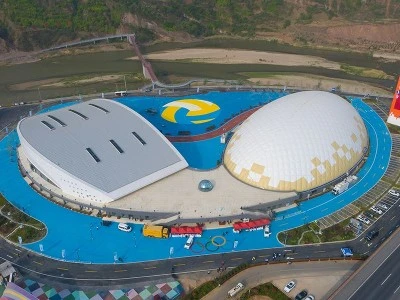
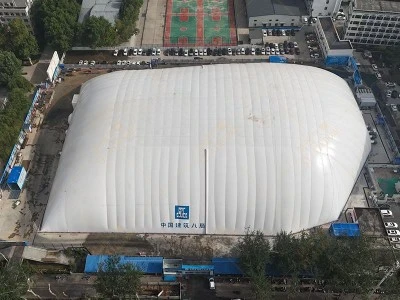
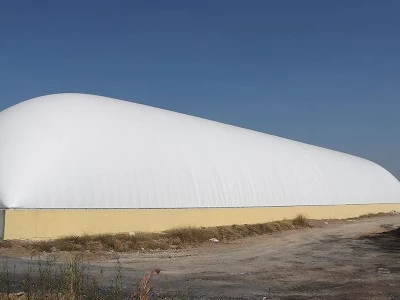
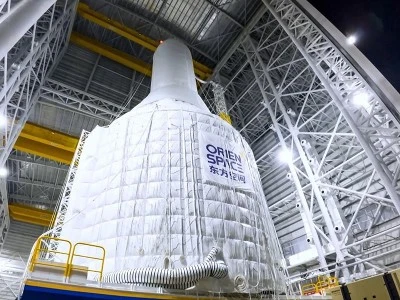
For inflatable agricultural structures-such as large-scale cultivation spaces, livestock shelters, or agricultural storage facilities-that utilize high-strength composite materials, the membrane thickness must be determined on a case-by-case basis according to the specific structure and load conditions; the standards applied to conventional agricultural films cannot be used here. Such membranes are typically composed of a fiber-based fabric with a polymer coating. During the design process, in addition to thickness, it is essential to evaluate the material's tensile strength, tear strength, seam strength, weather resistance, and long-term load-bearing performance. For facilities with large spans, those intended for long-term outdoor use, or those subject to significant wind or snow loads, calculations and verification must be performed, taking into account the overall structural design, internal operating pressure, and local climatic conditions. When procuring these materials, it is advisable to clearly define the intended use, material type, and expected service life. Subsequently, the appropriate thickness should be selected based on the product's technical documentation, and the material's suitability for the intended application should be confirmed through laboratory testing and structural analysis.