

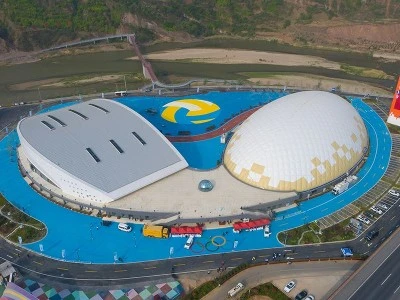
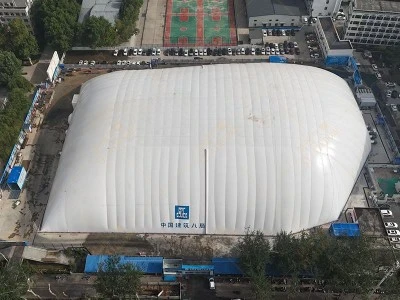
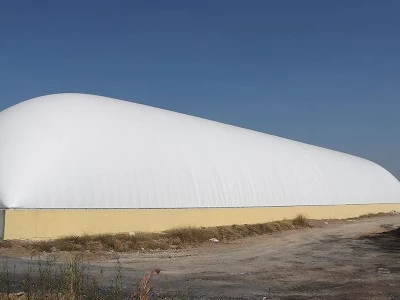
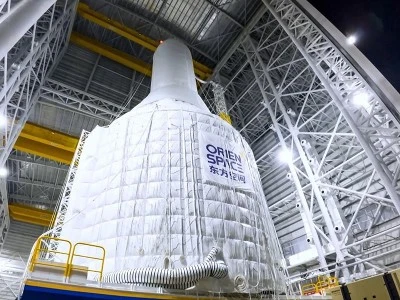
Air-supported structures for sports and tourism facilities primarily consist of high-strength flexible membrane materials, support and anchoring systems, air supply systems, and auxiliary control equipment. These structures are characterized by their low self-weight, large span, expansive interior space, and flexible overall design. Compared to traditional steel-structure sports venues, air-supported buildings typically eliminate the need for load-bearing columns within the activity area, providing an uninterrupted, open space suitable for sports such as tennis, badminton, basketball, and five-a-side soccer. This allows for flexible overall planning based on specific court dimensions, the number of participants, and intended functional use. The membrane material is generally a composite of a fiber-based fabric and a polymer coating; the specific material type and thickness are determined by factors such as the structural form, design loads, weather resistance requirements, and the intended service life. During the structural design process, engineers must account for variables-including the span of the venue, building height, and local wind and snow loads-to precisely determine the membrane's shape, load-bearing orientation, edge connection methods, and anchoring points, ensuring the structure remains stable under normal operating conditions and specified design loads. Depending on the support mechanism, these structures can be categorized as air-supported (pneumatic), air-ribbed (inflatable rib), or other membrane-based configurations. Air-supported structures rely on internal air pressure and membrane tension to maintain their form, making them ideal for creating large-span enclosed spaces; air-ribbed structures, by contrast, utilize inflatable ribs or similar components for support, with the specific load-bearing mechanics and equipment configuration dictated by the product design. Because different structural forms vary in terms of clear interior height, air supply methods, maintenance requirements, and emergency safety provisions, the choice of system must be tailored to the specific purpose of the venue and the conditions of the construction site.
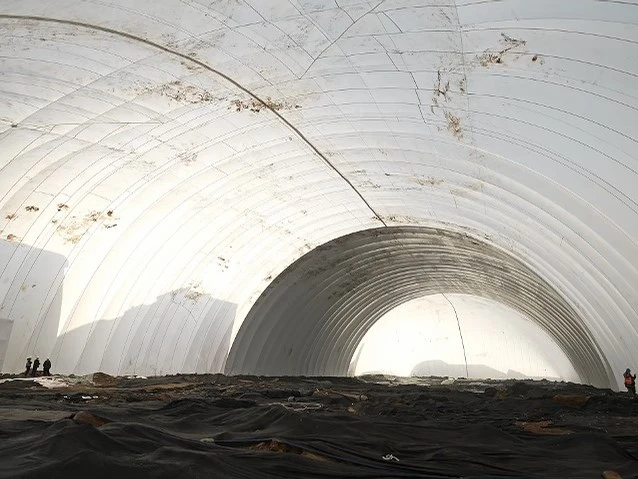
There is a high degree of synergy between the membrane, the anchoring system, and the mechanical and electrical equipment. The overall stability of the structure depends not only on the membrane material itself but also on the reliability of the foundation connections, the operation of the air-supply fans, and the performance of the control systems. For air-supported sports venues, the air supply system-which must continuously maintain the required internal air pressure-typically comprises primary and backup fans, air ducts, pressure sensors, and automated control units. When the entrances and exits of a venue are opened frequently, or in the event of localized air leakage from the membrane or changes in external weather conditions, the internal pressure and the operating status of equipment may fluctuate. Consequently, measures such as pressure monitoring, anomaly alerts, and backup power supply are essential to ensure continued, stable operation. The membrane is typically secured to the ground foundation using anchoring components, membrane-clamping assemblies, or other specialized connection nodes; these serve to transmit structural tensile forces and resist external loads, such as wind pressure. The design and construction quality of these connection points are critical to the overall safety of the structure. Furthermore, air-supported structures used for sports, culture, and tourism must be equipped with lighting, ventilation, air conditioning, fire safety, and evacuation systems tailored to the specific activities housed within. Adequate space must also be reserved for equipment maintenance, ensuring that mechanical and electrical installations or auxiliary facilities do not compromise the overhead clearance or safety of the designated sports areas. During routine operation, regular inspections should be conducted to check for damage to the membrane surface, the condition of seams, potential loosening of anchors, the performance of blowers, and the functionality of control system alarms. In the event of extreme weather-such as high winds or heavy snowfall-appropriate measures must be taken in strict accordance with design specifications and established emergency response plans. In summary, the structural advantage of air-supported venues for sports, culture, and tourism lies in their ability to create large-span, minimally supported indoor spaces; however, their safety relies on a combination of rigorous structural analysis, reliable equipment configuration, standardized construction and acceptance procedures, and ongoing maintenance and management.