

The inspection process for air-supported structures used in sports and cultural tourism should be tailored to the specific structural form, functional requirements, and operational characteristics of the facility. This process typically encompasses the review of preliminary documentation, examination of membrane materials and accessories, assessment of structural installation quality, commissioning of equipment systems, and final acceptance testing of the overall facility. Prior to inspection, relevant documentation-including design blueprints, structural calculations, quality certificates for membrane materials, technical specifications for equipment, and construction records-must be gathered to verify that the as-built facility aligns with the original design requirements. For membrane materials, the inspection should focus on identifying any damage, scratches, coating delamination, abnormal creases, or defects in the seams. Where necessary, and in accordance with design specifications, tests for tensile strength, tear resistance, and seam strength should be conducted. Regarding steel cables, anchors, connecting clamps, and foundation connections, the inspection should cover installation positioning, connection integrity, and fastener tightness, while also checking for signs of corrosion, deformation, or loosening. Following the inspection of individual materials and components, the overall structure must be evaluated, with particular attention given to membrane dimensions, edge anchorage, joint connections, and drainage configurations to ensure compliance with design documents. For large-span air-supported structures, structural safety cannot be determined by visual inspection alone; it must be verified against structural calculations and applicable engineering standards, specifically regarding wind and snow loads, membrane deformation, and anchorage forces. This combination of document review and on-site inspection allows for the timely identification of construction deviations or potential quality issues, providing a foundation for subsequent system commissioning and facility operation.
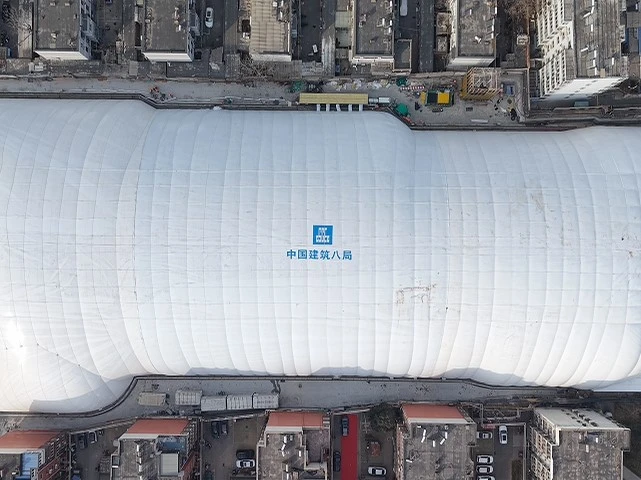
Furthermore, specialized inspections should be conducted for the air supply system, electrical control systems, and the facility's operational environment. For air-supported structures, this includes verifying the operational status of primary and backup blowers, assessing airflow volume and total pressure parameters, and inspecting the integrity and sealing of air duct connections. Additionally, functions such as internal pressure monitoring, anomaly alarms, automatic switching to backup blowers, and the activation of backup power supplies must be tested to ensure that the system performs according to design specifications-both during normal operation and under simulated failure conditions. For supporting facilities-such as ventilation, lighting, fire safety, and environmental monitoring systems-it is essential to verify their installation quality, operational performance, and integrated functional coordination. For venues designed for sports like badminton, tennis, or basketball, specific requirements must be assessed, including court lighting, flooring conditions, clear ceiling height, temperature and humidity levels, and ventilation efficiency, to ensure that these factors do not compromise athletic safety or the intended use of the facility. Should any issues arise during inspection-such as air leakage in the membrane structure, abnormal pressure fluctuations, loose anchorages, control system malfunctions, or non-compliant fire safety facilities-these must be promptly documented, with clear requirements for rectification, followed by a re-inspection once the necessary fixes are completed. Ultimately, all inspection data, equipment commissioning records, rectification reports, and relevant acceptance documentation should be compiled to finalize the acceptance process in accordance with local regulations, standards, and project design specifications. For air-supported structures already in operation, a system of routine inspections and specialized checks should be established; furthermore, targeted re-evaluations should be conducted following extreme weather events (such as high winds or heavy snowfall), equipment failures, or major maintenance work. By integrating preliminary document review, on-site physical inspection, equipment integration testing, and ongoing operational maintenance, one can gain a comprehensive understanding of the actual condition of air-supported sports and cultural tourism facilities, thereby mitigating the risk of structural or equipment failure and ensuring the long-term safe use of the venues.