

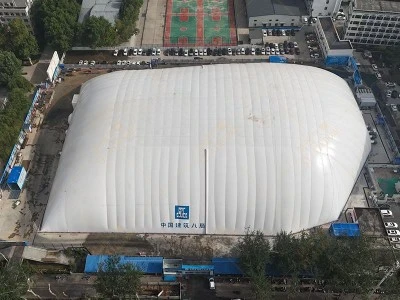
An air-supported membrane structure for foundation pits is primarily used to fully enclose the site and manage the construction environment during excavation. By utilizing high-strength flexible membrane materials, an air-supply system, and an anchoring structure, it creates a relatively sealed workspace over the foundation pit or construction area. Its primary function is to control construction-related dust, preventing the spread of particulate matter generated by earthwork excavation, loading and unloading, vehicle transport, and other activities. Compared to traditional hoarding or localized dust-control shelters, these membrane structures can cover a much larger area. They can also be integrated with spray-based dust suppression, air purification, and ventilation systems to enhance overall dust management. Furthermore, the enclosed structure helps dampen construction noise, mitigating the impact of site activities on nearby residential areas, roads, and other sensitive zones. Additionally, the membrane provides a degree of environmental isolation, shielding specific construction processes-such as excavation, steel reinforcement fabrication, and the construction of underground structures-from the interference of wind, rain, low temperatures, or external airflow fluctuations. For projects with long construction durations, stringent environmental protection requirements, or those located in densely built-up areas, such membrane structures facilitate better site management and alleviate the pressure that dust and noise control place on the surrounding environment. It should be noted, however, that the actual effectiveness depends on the integrity of the seal, the design of the ventilation system, the configuration of dust-removal equipment, and daily operational management; the membrane alone cannot completely eliminate construction-related pollution.
Another significant benefit of using an air-supported membrane structure is the improvement of construction organization, which enhances the continuity of specific tasks and boosts overall site management efficiency. Through careful spatial planning within the enclosure, dedicated zones can be designated for construction machinery, material storage, transport routes, and personnel, thereby reducing the extent to which external weather conditions disrupt the construction schedule. During winter, the enclosed space blocks the direct ingress of cold air and can be supplemented with heating equipment to improve the local working environment. In contrast, during hot summer weather, mechanical ventilation, cooling systems, and air quality monitoring are necessary to prevent the accumulation of heat and the buildup of hazardous gases within the space. For projects involving ongoing earthwork transport, steel reinforcement processing, or underground structural construction, air-supported structures (air membranes) can be integrated with lighting, ventilation, sprinkler, and intelligent monitoring systems, facilitating the centralized management of the construction environment and equipment status. In terms of operational utility, certain air-supported structures used for excavation pits offer advantages such as rapid installation, relatively convenient dismantling, and the reusability of the membrane material; under appropriate project conditions, they can reduce the workload associated with traditional, fixed-type enclosures. However, these structures do not provide excavation support, slope stabilization, or groundwater control, nor can they serve as a substitute for essential fire safety, ventilation, or emergency evacuation measures. In practical application, a specialized design-tailored to the span of the excavation, the surrounding environment, wind and snow loads, the layout of construction equipment, and site-specific safety requirements-is necessary. Furthermore, rigorous maintenance of the air-supply system, regular inspection of the membrane, and robust emergency management for extreme weather conditions are essential to fully realize the benefits of these structures in terms of environmental protection and construction support.