

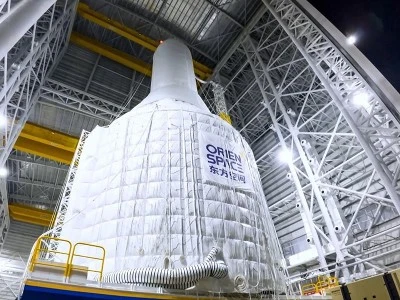
Aerospace-grade gas-containment membranes are characterized by their lightweight, thin-walled, and high-precision structural design. They are primarily utilized in aerospace equipment for gas sealing, gas transport, pressure isolation, and related auxiliary systems. Their structural configuration must be tailored to the specific operating environment, the properties of the contained medium, and the working pressure. Compared to standard industrial membrane structures, aerospace-grade membranes are subject to more stringent requirements regarding material thickness, dimensional tolerances, connection methods, and overall manufacturing quality. While fulfilling their primary functional requirements, these structures must be as lightweight as possible while maintaining sufficient strength, rigidity, and gas-tightness-ensuring they remain free from localized deformation, cracking, or leakage under conditions such as pressure fluctuations, mechanical vibrations, or temperature variations. The membrane itself is typically constructed from flexible, pressure-resistant, and environmentally durable thin-film or composite materials, configured as single-layer, multi-layer, or locally reinforced structures depending on the specific operational demands. In areas subject to concentrated loads, the design may incorporate increased material thickness, additional reinforcement layers, or optimized connection geometries to enhance load-bearing capacity. For regions prone to stress concentrations-such as edges, interfaces, and corners-careful attention is paid to structural transitions and manufacturing precision to mitigate the risk of fatigue-related damage over long-term use.
Aerospace-grade gas-containment membranes generally consist of the membrane body, sealing edges, connection interfaces, localized reinforcement zones, and necessary support or limiting components, all of which must be precisely integrated. The membrane structure must not only accommodate the deformations induced by gas pressure but also maintain dimensional stability, preventing excessive expansion, wrinkling, or localized instability during repeated pressurization/depressurization cycles or under external loading. The sealing interface is a critical element of the overall design; the choice of connection type, contact configuration, and sealing material directly influences the membrane's performance. Consequently, the design process must balance sealing reliability, connection strength, and ease of assembly. In applications characterized by alternating high and low temperatures, continuous vibration, or complex loading, it is essential to account for factors such as differential thermal expansion, interlaminar bond strength, and performance degradation under cyclic stress. This helps prevent issues like material aging, interfacial delamination, or the loosening of connections, which could otherwise compromise overall reliability. Furthermore, the manufacturing of aerospace-grade inflatable membranes requires rigorous control over cutting dimensions, forming processes, seam quality, and surface integrity. Additionally, the membranes must undergo testing for airtightness, pressure resistance, and environmental adaptability in accordance with specific operational requirements. By optimizing the membrane thickness, reinforcing critical zones and interface structures, and applying targeted enhancements to key areas, it is possible to improve the stability, sealing performance, and long-term operational reliability of the inflatable structure while effectively managing its overall weight.