

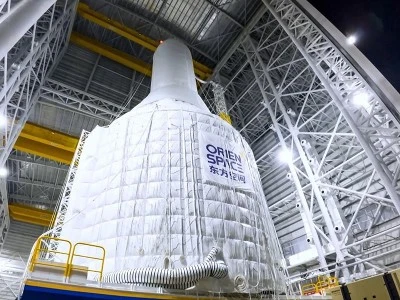
The aerospace-related pneumatic membrane industry is progressively evolving toward lightweight, high-performance, precision-manufactured, and highly reliable solutions. As aerospace equipment increasingly demands structural weight reduction, optimized space utilization, and long-term operational stability, the design philosophy for pneumatic membrane products is shifting. Approaches that once focused primarily on basic sealing or gas isolation are now transitioning toward the synergistic optimization of material properties, structural design, and operational environments. In terms of materials, there is growing interest in polymers and composite materials that offer high strength, excellent flexibility, resistance to extreme temperatures, and durability against aging. By refining material formulations, membrane layer combinations, and localized reinforcement structures, it is possible to enhance pressure resistance, airtightness, and service life while keeping product weight under control. Regarding structural design, the industry is placing greater emphasis on managing load distribution, seam connections, sealing interfaces, and the mitigation of localized stress concentrations. Through a combination of simulation analysis and experimental validation, structural damage-often caused by cyclic pressurization, temperature fluctuations, or mechanical vibration-can be minimized. Furthermore, given that aerospace products are typically characterized by limited production runs, stringent technical requirements, and a high degree of customization, suppliers must possess not only robust material processing and forming capabilities but also the expertise to provide tailored structural designs and integrated solutions based on the specific installation space, operating pressure, and environmental conditions of each piece of equipment. Overall, the focus of competition in the pneumatic membrane sector is shifting from simple product fabrication toward comprehensive capabilities, including material R&D, structural optimization, process control, and holistic quality assurance.
Digital manufacturing, quality traceability, and product validation capabilities are set to become key development priorities for the aerospace-related pneumatic membrane industry. As the demand for consistency and reliability in aerospace components continues to rise, companies are increasingly prioritizing refined production management. This includes the gradual adoption of automated cutting, precision heat sealing, composite forming, and in-line inspection processes to minimize dimensional deviations and quality fluctuations stemming from manual labor. Simultaneously, the use of computer-aided design (CAD), finite element analysis (FEA), and the comparison of experimental data allows for the proactive identification of potential issues-such as those arising from pressure, temperature, or vibration-thereby shortening the product design and validation cycle. Industry research from the China Composites Industry Association also indicates that the continued expansion of composite material applications in the aerospace sector is driving an increased demand for high-performance molding materials, while simultaneously setting higher standards for material quality, manufacturing processes, and supply chain capabilities.