

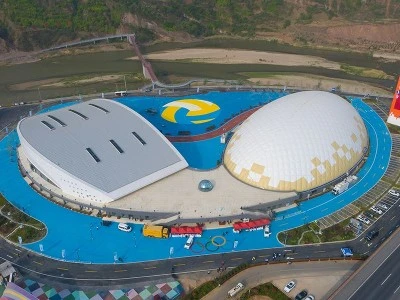
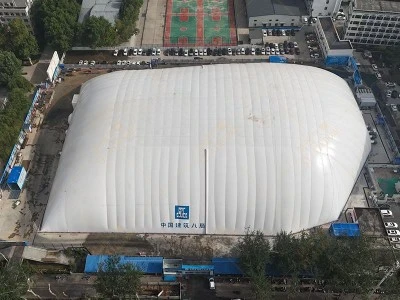
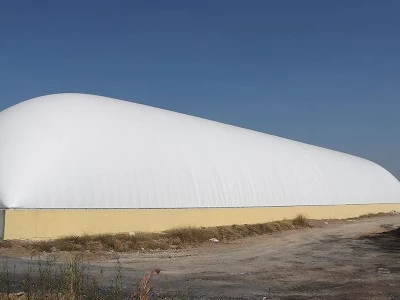
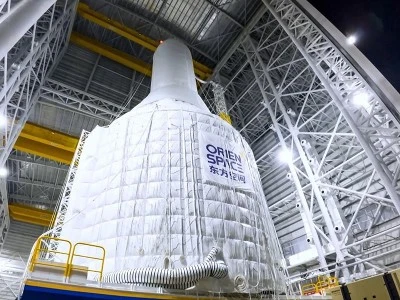
The components of an air-supported structure for an excavation pit primarily include the membrane material, connectors and fasteners, anchoring assemblies, air supply equipment, and associated ventilation and control systems. These components work in tandem to ensure the overall stability and proper operation of the air-supported structure. The membrane itself-typically made from high-strength coated fabric or composite membrane material-serves as the primary enclosure for the entire system; its properties directly influence the structure's tensile strength, weather resistance, and service life. To ensure reliable connections-both between membrane sections and between the membrane and the foundation-various components are employed, such as clamping strips, connecting plates, steel cables, cable clamps, anchors, turnbuckles, embedded parts, and other fastening hardware. Anchoring components are essential for transferring the tensile forces generated within the membrane to the foundation, thereby minimizing the risk of excessive displacement under wind loads. Connectors are used to secure the edges of the membrane, join individual membrane panels, and manage transitions at corners or interfaces. For air-supported structures, an air supply system is indispensable; it typically comprises primary and backup blowers, air ducts, dampers, check valves, and air supply vents. These components maintain the designed internal pressure, ensuring the structure retains its stable form during operation. Some installations also incorporate variable-frequency drives (VFDs) and pressure sensors, which adjust blower performance based on internal pressure fluctuations-preventing issues such as insufficient airflow, equipment failure, or air leaks that could compromise the structural integrity. The specific configuration of components varies depending on the structural design, including factors such as the span of the air-supported structure, the required internal pressure, the construction environment, and specific structural design specifications.
Air-supported structures for excavation pits also typically require entry and exit facilities, electrical control systems, environmental monitoring devices, and safety-related components to accommodate personnel access, vehicle movement, and daily site management. Access components include pedestrian doors, vehicle access gates, high-speed roll-up doors, sealing strips, and necessary emergency evacuation doors. Proper installation of these elements helps minimize air leakage at entry and exit points while ensuring that construction machinery and transport vehicles can move through without obstruction. The electrical control system typically consists of power distribution cabinets, variable-frequency drives (VFDs), circuit breakers, cables, junction boxes, and control modules, which collectively manage the power supply and operational control of the air-supported structure's blowers and related equipment. Pressure sensors, temperature and humidity sensors, and dust monitoring equipment can be integrated into the monitoring system-as required by the specific project-to provide real-time data on internal air pressure and the construction environment. For projects with stringent dust control requirements, additional systems such as dust-suppression sprinklers, air filtration units, and mechanical ventilation equipment may be installed to improve air quality within the enclosed space. Furthermore, backup power supplies, fault alarm systems, fire-safety equipment, and emergency lighting should be incorporated based on the scale of the project and relevant safety design standards. When selecting components, it is essential to look beyond the specifications of individual units; one must also verify the compatibility between the membrane material and its connectors, ensure that the blower's airflow capacity and total pressure meet design requirements, and confirm that the electrical control system is capable of triggering necessary fault alarms and executing emergency switching. For large-scale air-supported structures used in excavation pits, particular attention must be paid to the installation quality of anchorage points, blower foundations, and air-supply ductwork. A routine inspection and maintenance protocol should also be established to ensure that all components function reliably throughout the construction period, thereby minimizing safety risks-such as those arising from loose connections, irregularities in air supply, or equipment malfunctions.