

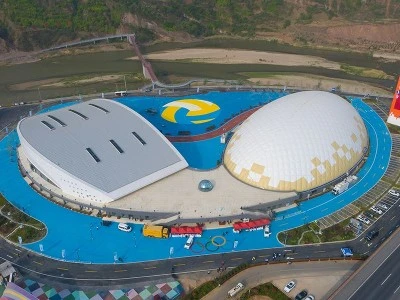
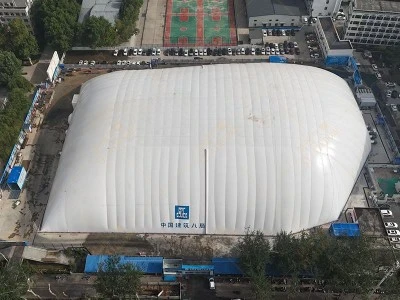
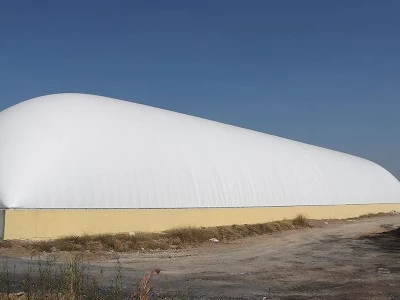
Air-supported structures are suitable for a wide range of sports and recreational activities, including tennis, badminton, basketball, volleyball, futsal, pickleball, table tennis, and physical conditioning. Their expansive, column-free interiors offer a distinct advantage for sports facility construction. For sports like tennis and badminton-which demand specific requirements regarding clear ceiling height, lighting, and environmental stability-air-supported structures provide excellent protection against adverse weather such as rain, snow, or low temperatures, ensuring that training sessions and daily operations remain largely independent of seasonal changes. For basketball, volleyball, and indoor soccer, these facilities can be custom-designed to accommodate specific court dimensions, participant numbers, and functional needs; layouts can be optimized to include dedicated sports zones, rest areas, equipment storage, and circulation paths, effectively supporting everything from general fitness and youth training to club activities and amateur tournaments. Furthermore, these structures can host activities such as aerobics, yoga, martial arts, dance, and comprehensive physical training, with flexible interior partitioning that maximizes space utilization. During the planning and construction phase, parameters such as span, clear height, flooring materials, lighting intensity, and ventilation systems must be tailored to the specific sports involved. For activities sensitive to airflow-such as badminton and tennis-careful placement of air supply vents is essential to prevent drafts from interfering with the trajectory of the ball, thereby ensuring the environment meets the necessary performance standards.
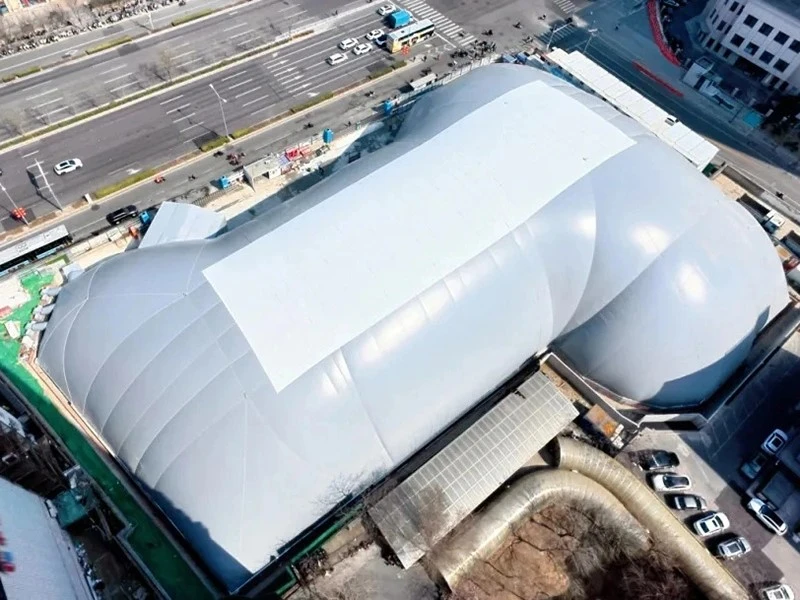
Beyond serving as standalone sports venues, air-supported structures can be integrated with sports training, family-oriented entertainment, leisure tourism, and themed events to create multifunctional sports and lifestyle hubs. For instance, in tourist resorts, urban sports parks, or large-scale commercial complexes, these structures can be developed into comprehensive sports centers. Such facilities might house tennis and badminton courts, children's play or sports zones, and physical conditioning areas, complemented by amenities like changing rooms, lounges, retail outlets for sporting goods, and food and beverage services-collectively catering to the diverse athletic needs of people of all ages. For facilities focused on family-oriented experiences, one might incorporate activities such as children's obstacle courses, recreational ball games, or indoor climbing. For venues centered on specific sports, facility utilization can be enhanced through long-term training programs, member reservation systems, club-level competitions, and sports-themed events. Depending on local tourism resources and seasonal factors, some air-supported (air-dome) structures can even host specialized activities like indoor ice skating or ice hockey training; however, such initiatives require additional investments in refrigeration, dehumidification, and anti-condensation systems, which impose higher demands on construction requirements and operational costs. It is important to note that when defining the scope of a sports-leisure air-dome project, one must look beyond the mere capacity to house specific sports. A comprehensive assessment-covering the local target demographic, consumer purchasing power, accessibility/transportation, facility scale, and long-term maintenance costs-is essential. Furthermore, the design phase must rigorously address structural safety, fire evacuation protocols, air quality standards, and equipment operational requirements. Only by integrating sports programming, facility construction, and ongoing operations can one fully leverage the inherent flexibility and versatility of air-supported structures, thereby maximizing both space utilization and long-term commercial viability.