

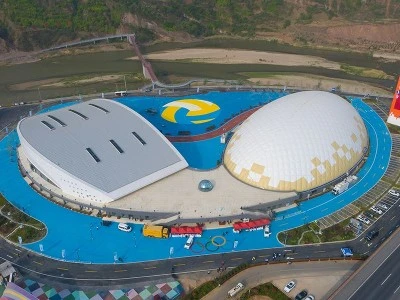
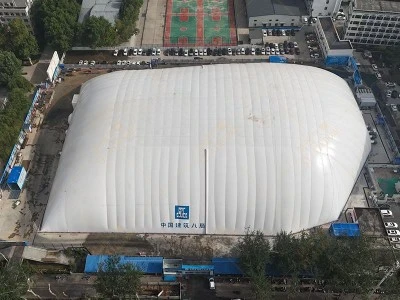
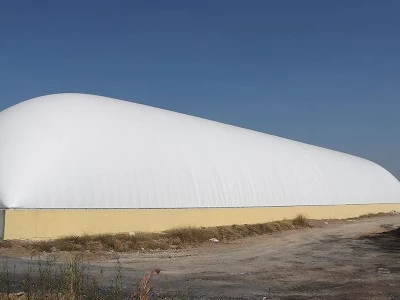
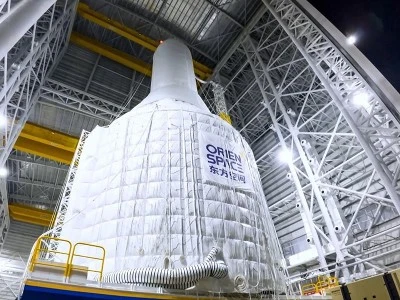
Air-supported structures for sports and tourism typically utilize high-strength composite membrane materials to create large-span enclosed spaces, making them suitable for venues hosting sports such as tennis, badminton, basketball, and soccer. Compared to traditional steel-structure venues, air-supported structures are lighter in weight and offer higher space utilization. However, their structural stability cannot be assessed solely by the thickness of the membrane or its external appearance; it must be verified through professional structural analysis. During the design phase, factors such as the venue's span, building height, local wind and snow loads, and temperature fluctuations must be considered to calculate the stress on the membrane, overall deformation, and the reliability of anchorage points and foundation connections. For air-supported structures that rely on internal air pressure to maintain their shape, the air supply system is critical to structural stability. It must be equipped with primary and backup blowers, pressure monitoring devices, fault alarm systems, and auxiliary power sources to ensure that appropriate measures can be taken during both normal operation and equipment malfunctions. Furthermore, these venues must incorporate fire safety designs, evacuation routes, emergency lighting, and necessary safety protection facilities tailored to their specific intended use. Beijing has issued guidelines for the planning and management of air-supported sports facilities, explicitly requiring such structures to comply with relevant planning, construction, and fire safety standards, while mandating rigorous oversight throughout their construction, operation, and maintenance.
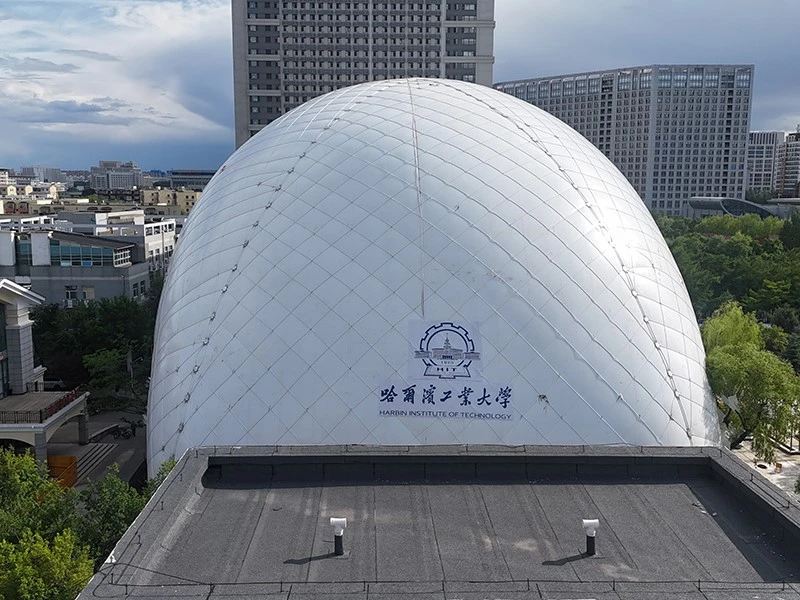
The safety and stability of air-supported sports and tourism facilities also depend on continuous equipment maintenance and standardized venue management. Operators should conduct regular inspections of the membrane surface to check for damage, aging, unusual folds, or seam failures, and ensure that anchorage components, edge connections, blowers, air ducts, and electrical control equipment are in proper working order. For air-supported venues, internal pressure must be continuously monitored to verify that pressure alarms, backup blower activation, and auxiliary power supply systems are functional, thereby preventing abnormal internal pressure drops caused by power outages, equipment failures, or membrane leaks. In the event of severe weather-such as high winds, heavy snow, or torrential rain-operators must follow the design specifications and emergency response plans; this may include closing the facility and arranging for professional inspections. Crucially, increasing internal air pressure should never be used as a substitute for a formal structural safety assessment. Given that sports venues often accommodate large numbers of people simultaneously, particular attention should be paid to fire safety facilities, the number and capacity of entrances and exits, emergency evacuation routes, indoor air quality, and the control of temperature and humidity. This is essential to prevent safety issues arising from overcrowding, inadequate ventilation, or equipment failure. For commercial venues open to the public, it is recommended to establish protocols for equipment inspections, regular professional audits, emergency response procedures, and staff training, while also ensuring compliance with all local regulatory requirements and completion of necessary inspections and approvals. Furthermore, the 2026 guidelines issued by Shanghai regarding the management of air-supported (inflatable) sports structures explicitly mandate regular inspection and maintenance of the membrane structure, inflation systems, and fire safety facilities.