

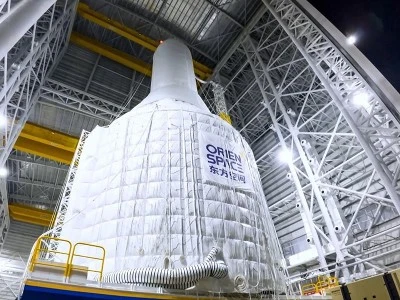
The design principles for aerospace-related pneumatic membranes are primarily based on the product's intended operational function. By integrating material mechanical properties, gas pressure effects, structural load-bearing characteristics, and sealing requirements-and through the strategic design of membrane geometry, thickness, connection methods, and the configuration of functional layers-these membranes can achieve a balance between lightweight requirements, structural stability, and operational reliability. The design process begins by defining the membrane's operating environment and technical specifications-such as operating pressure, temperature range, gas medium, available installation space, external loads, and expected service life-which then inform the selection of appropriate materials and structural configurations. For membranes primarily serving a gas-sealing function, key considerations include the material's gas-barrier properties, flexibility, and the effectiveness of seals at the joints. For inflatable membrane structures subjected to pressure loads, it is essential to analyze the loads exerted by gas pressure on the membrane surface and their transmission paths; this ensures that membrane stress and localized deformation are effectively controlled, preventing issues such as uneven expansion, tearing, or structural instability. Research into aerospace inflatable structures indicates that membrane geometry, the arrangement of load-bearing layers, and material properties collectively influence the structural stress state; consequently, the design phase typically requires validation through a combination of theoretical calculations, structural simulations, and prototype testing.
The design of aerospace-related pneumatic membranes often necessitates an integrated approach involving layered design, structural optimization, and reliability verification. For multi-layer composite membranes, distinct layers-such as gas-barrier layers, load-bearing layers, and external protective layers-can be configured to handle specific functions (gas containment, load transmission, and environmental protection, respectively), thereby enhancing the overall performance of the structure. In cases where dimensions and weight are strictly constrained, the membrane thickness, reinforced zones, and connection points must be optimized to meet strength, pressure-resistance, and gas-tightness requirements without introducing unnecessary weight through over-design. Furthermore, designers must account for how material performance may evolve under conditions such as temperature fluctuations, mechanical vibration, and cyclic pressure loading-paying particular attention to potential stress concentrations at seams, corners, interfaces, and the junctions between layers. For air-supported (inflatable) membrane structures with specific load-bearing requirements, finite element analysis (FEA) can be employed to evaluate stress, strain, and deformation under various operating conditions. The design results should then be validated through pressure testing, airtightness testing, cyclic loading tests, and any necessary environmental adaptability tests. The certification guidelines for crewed, flexible, inflatable structures-published by NASA-also highlight design load analysis, the evaluation of materials and components, and structural testing/validation as critical elements.
Consequently, the design of air-supported membrane structures for aerospace applications cannot focus solely on isolated material metrics or specific sealing performance. Instead, it requires a holistic approach that encompasses material selection, structural loading, manufacturing processes, interface sealing, and the intended operational environment. By continuously refining the design in alignment with the product's specific technical requirements, an optimal balance can be achieved among weight, structural strength, airtightness, and service life.