

The operating pressure of an air-supported structure for an excavation pit refers to the internal air pressure maintained during normal operation to preserve the structure's designed shape and stability. It is a critical technical parameter that influences the structure's load-bearing capacity, deformation control, and operational safety. In an air-supported system, the membrane itself is a flexible structure; it relies on a continuous supply of air from blowers to maintain an internal pressure higher than the external atmospheric pressure, thereby creating a stable, enclosed space. Determining the appropriate operating pressure depends on several factors-including the span and rise of the structure, the mechanical properties of the membrane material, the anchoring method, and local wind and snow loads-and higher pressure is not necessarily better. If the pressure is too low, the membrane may become slack, sag, or undergo localized deformation, compromising the overall structural stability. Conversely, if the pressure is too high, it increases the stress on the membrane material, seams, and anchor points, which can shorten the service life of the materials. Therefore, during the engineering design phase, an optimal operating pressure range must be established based on the specific structural form and actual load conditions, and subsequently verified through structural calculations, equipment selection, and operational testing. For air-ribbed or air-cushioned structures, the pressure control methods for the internal inflatable units differ from those used in air-supported structures; these must be determined according to their specific structural designs and technical requirements, rather than applying a uniform set of pressure parameters across all types.
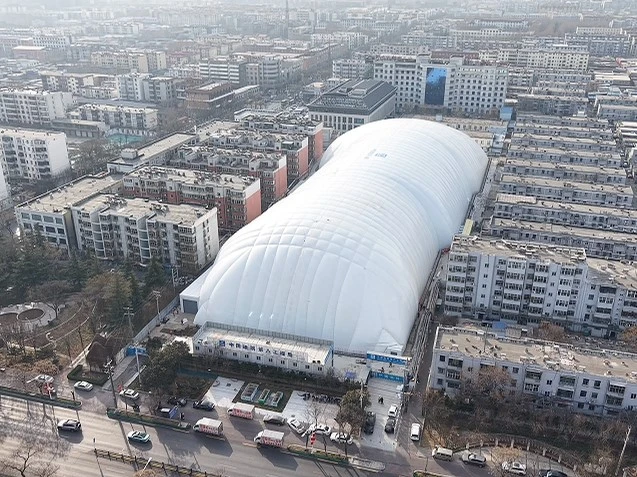
The operating pressure of an air-supported structure for an excavation pit is typically monitored and regulated using pressure sensors, an automated control system, and air-supply equipment to ensure the membrane remains in the proper state throughout the construction period. In some air-supported projects, a design operating pressure of approximately 200 Pa is used as a reference, with 100 Pa serving as a low-pressure reference value under certain design conditions. However, these figures do not constitute a universal standard for all such structures; the specific control range should be determined based on project design documents, applicable technical guidelines, and the technical specifications of the equipment. During operation, the blowers must adjust the air supply volume in response to fluctuations in internal pressure. Because internal pressure can become unstable-due to factors such as blower failure, power supply issues, damage to the membrane, or frequent opening of entrances and exits-the system should be equipped with appropriate pressure alarms, backup blowers, and emergency power supply measures. In the course of daily management, components such as fans, air ducts, valves, membrane seams, and edge seals should be inspected regularly to prevent air leakage, which could lead to a continuous drop in internal pressure. During adverse weather conditions-such as high winds, heavy rain, or snowfall-the operational status of the air-supported structure should be evaluated based on on-site monitoring data and structural design requirements; simply increasing the internal pressure is not an appropriate method for managing external loads. For large-scale or complex air-supported structure projects, it is recommended that the normal operating pressure, alarm pressure, and minimum allowable pressure-along with procedures for handling abnormal situations-be clearly defined during the design phase. These parameters should then be incorporated into equipment commissioning, project acceptance, and ongoing operational maintenance to ensure the long-term, stable performance of the air-supported structure.